
Introduction
In today’s digital world, businesses need a strong online presence to attract customers and increase sales. One of the most popular ways to promote a business online is through Google Ads.
Google Ads is an online advertising platform that helps businesses show advertisements to people searching for products, services, or information on Google. It allows businesses to reach potential customers at the right time.
Whether you own a small business, run an online store, or provide digital marketing services, understanding Google Ads can help you grow your business.
In this beginner-friendly guide, we will explain what Google Ads is, how it works, its different types, and how you can use it to reach your target audience.
What Is Google Ads?
Google Ads is an online advertising platform developed by Google. It allows businesses to create paid advertisements that can appear on Google Search, YouTube, websites, apps, and other Google advertising placements.
For example, suppose someone searches for “best digital marketing agency near me.” A relevant business running Google Search Ads may appear at the top of the search results with an advertisement label.
When users click on these ads, they can visit the business website, call the company, or complete another desired action, depending on the campaign setup.
Google Ads can help businesses:
- Reach potential customers online.
- Generate leads and website traffic.
- Promote products and services.
- Increase brand awareness.
- Track advertising performance.
- Measure conversions and sales.
How Does Google Ads Work?
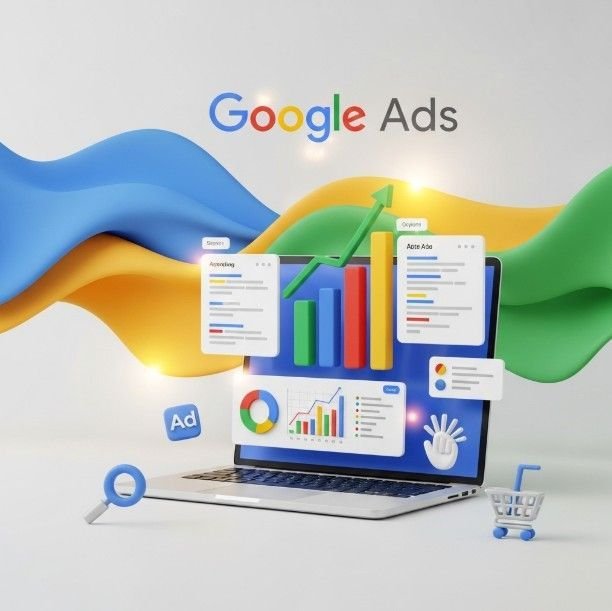
Google Ads uses an advertising auction to determine which ads can appear when someone searches or visits eligible advertising placements.
Here is how the process generally works.
1. Choose Your Advertising Goal
First, decide what you want to achieve. Your goal might be to generate leads, increase website traffic, receive phone calls, sell products, or build brand awareness.
A clear goal helps you select the appropriate campaign type and measure results.
2. Select Relevant Keywords
Keywords are words or phrases that help connect your search advertisements with relevant searches.
For example, a digital marketing agency might target keywords such as:
- Digital marketing services
- Google Ads agency
- Website development services
- SEO services near me
Choose keywords based on your services, customer needs, and advertising budget.
3. Create Your Advertisement
Write an advertisement that explains your service and encourages users to take action. Depending on the campaign type, you may use headlines, descriptions, images, videos, or product information.
Your ad should clearly communicate what you offer and why a potential customer should consider your business.
4. Set Your Budget and Bidding Strategy
You can set an average daily budget and choose a bidding strategy suited to your advertising goals.
For example, you might use a strategy focused on clicks to attract website visitors or a conversion-focused strategy to encourage leads and purchases.
Your actual spending and results depend on competition, targeting, campaign settings, and user behavior.
5. Google Runs an Ad Auction
When an eligible search or advertising opportunity occurs, Google evaluates eligible ads using factors such as bid, ad quality, relevance, and the expected impact of ad assets.
The highest bid does not automatically guarantee the top position. Ad quality and other auction factors also matter.
6. Track Your Results
After launching your campaign, monitor performance using Google Ads reporting and, where appropriate, Google Analytics.
Important metrics include clicks, impressions, click-through rate (CTR), cost per click (CPC), conversions, cost per lead (CPL), and return on ad spend (ROAS).
Reviewing these metrics helps you identify opportunities to improve your campaign.
Types of Google Ads Campaigns
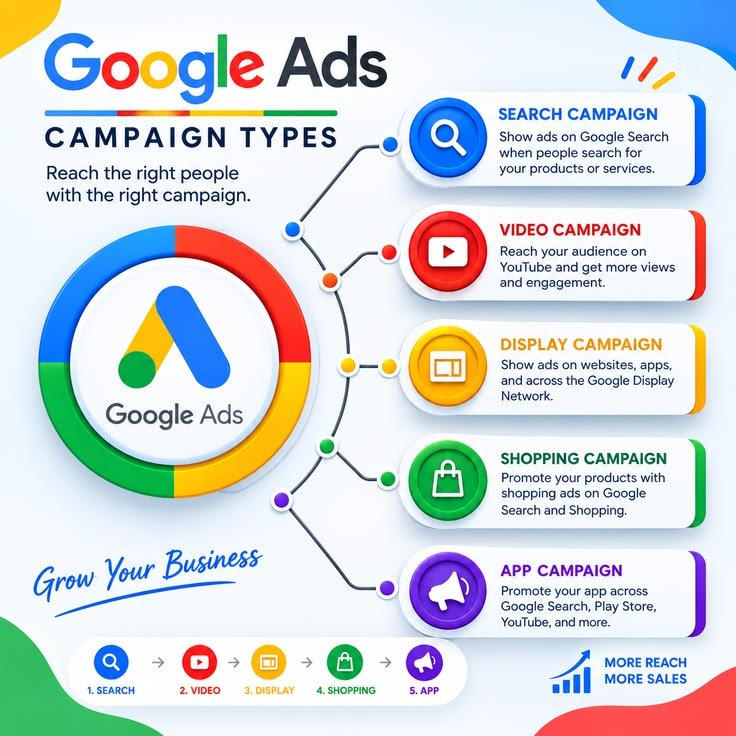
Google Ads offers different campaign types for different marketing goals.
1. Search Ads
Search Ads are text-based advertisements that can appear on Google search results pages.
They are useful for reaching people who are actively searching for a product or service.
Example: An advertisement for “website design services in Noida” may reach users looking for a website designer.
2. Display Ads
Display campaigns can show visual advertisements across eligible websites and apps in the Google Display Network.
They can help businesses increase awareness and reach relevant audiences.
3. Video Ads
Video campaigns help businesses advertise through YouTube and other eligible video placements.
They are useful for product demonstrations, brand storytelling, tutorials, and promotional videos.
4. Shopping Ads
Shopping campaigns help online retailers promote products using information such as product images, prices, and store details.
They are particularly useful for e-commerce businesses with product feeds.
5. Performance Max Campaigns
Performance Max is a goal-based campaign type that can access multiple Google advertising channels through one campaign, subject to eligibility and campaign settings.
It uses Google’s automation to help advertisers pursue goals such as sales and lead generation.
6. App Campaigns
App campaigns help businesses promote mobile applications and encourage actions such as app installations or in-app engagement.
The most suitable campaign depends on your business model, target audience, and marketing objective.
What Are the Benefits of Google Ads?
Reach the Right Audience
Google Ads offers targeting options that help you reach relevant users based on factors such as search intent, location, language, and audience signals, depending on the campaign type.
Control Your Advertising Budget
You can set campaign budgets and adjust them as your business needs change. However, actual daily spending can vary, so it is important to understand Google’s budget rules and monitor account costs.
Get Measurable Results
Google Ads reporting helps you evaluate how many people saw or clicked your ads and how many completed tracked actions.
Generate Leads and Sales
Well-targeted campaigns can connect your business with people interested in your products or services.
Results depend on your offer, landing page, competition, targeting, and campaign management.
Reach Local Customers
Local businesses can use location targeting and suitable campaign features to reach potential customers in their service areas.
For example, a local dentist, coaching institute, or website development agency can focus advertising on relevant locations.
How Much Does Google Ads Cost?
Google Ads does not have one fixed price for every advertiser. Costs depend on your industry, competition, keywords, campaign type, bidding strategy, and target audience.
Many search campaigns use a cost-per-click model, meaning advertisers can pay when someone clicks an eligible ad. Other campaign types and bidding strategies may use different billing or optimization models.
Before starting a campaign:
- Set a realistic budget.
- Research your keywords and competitors.
- Create relevant advertisements.
- Build a useful landing page.
- Track leads, sales, and advertising costs.
- Optimize campaigns based on actual performance.
Remember that spending more money does not automatically guarantee more customers or higher profits.
Google Ads vs. SEO: What Is the Difference?
Google Ads and Search Engine Optimization (SEO) can both help businesses attract visitors from search-related activities, but they work differently.
Google Ads provides paid advertising opportunities, while SEO focuses on improving a website’s visibility in organic search results.
Google Ads can help you reach potential customers soon after your campaign becomes eligible to serve. SEO generally requires ongoing work and time to build organic visibility.
Many businesses use both strategies to support short-term advertising goals and long-term organic growth.
Tips for Beginners Starting with Google Ads
If you are new to Google Ads, follow these practical tips:
- Define one clear campaign goal.
- Research relevant keywords before launching.
- Write specific and compelling ad copy.
- Send visitors to a relevant landing page.
- Use appropriate location and language settings.
- Set up conversion tracking correctly.
- Review search terms and add negative keywords when appropriate.
- Monitor CPC, CTR, conversion rate, and cost per lead.
- Test improvements systematically.
- Avoid making major changes based on very limited data.
A well-structured campaign with clear tracking makes it easier to understand what is working and where your budget is going.
Conclusion
Google Ads is a powerful online advertising platform that helps businesses connect with potential customers across Google’s advertising channels. From Search Ads and Display Ads to Video and Performance Max campaigns, advertisers can choose approaches that match their business goals.
Success requires more than simply creating an advertisement. You need relevant targeting, useful ad copy, a strong landing page, a suitable budget, and accurate conversion tracking.
If you want to improve your online advertising strategy, learning how Google Ads works is an excellent first step.
At Growth With Harpal, explore digital marketing resources to understand advertising, attract potential customers, and build a stronger online presence.
Frequently Asked Questions (FAQs)
1. What is Google Ads used for?
Google Ads is used to promote products and services online, generate leads, increase website traffic, drive sales, and build brand awareness.
2. Is Google Ads free to use?
Creating a Google Ads account does not usually require an account setup fee, but running paid advertisements costs money. Some free tools and learning resources are available separately.
3. Can beginners use Google Ads?
Yes. Beginners can start by learning campaign types, keyword research, budgeting, ad creation, and conversion tracking.
4. What is CPC in Google Ads?
CPC stands for Cost Per Click. It measures the amount paid for a click or, when used as an average metric, the average cost of clicks received.
5. How long does Google Ads take to work?
Campaigns may begin serving after setup, review, and eligibility requirements are met. However, obtaining consistent leads or sales can take longer and depends on campaign performance and market conditions.
6. Which Google Ads campaign is best for beginners?
Search campaigns can be a useful starting point for businesses with clear customer search intent. The best option depends on your goals, budget, products, and target audience.